
Music
Ievgen PUGACHOV: Jazz as the Art of Finding Beauty in the Complex
By Event Cartel • Oct 17, 2024

It happens like this: you prepare for an interview with a cool jazz guitarist, thinking
everything will go familiarly, calmly, and, let’s be honest, predictably. Question – answer,
question – answer. First guitar, concerts, creative plans… But during my interview with
Ievgen Pugachov, I couldn’t help – and still can’t – the feeling that this isn’t just a
musician, but a person who truly makes a difference. I desperately wanted to be part of
his world. Because in his world, music isn’t just a beloved craft, comfort, or joy – it’s the
way to make the surrounding reality kinder and more beautiful.
Ievgen Pugachov is an Honored Artist of Ukraine, a laureate and jury member of
numerous international music competitions. He can play Bach’s violin concerto on an
electric guitar, organize an informal jam session with Grammy winners in his Brooklyn
apartment, and do something 99% would probably be afraid of – he teaches guitar to
people with wide spectrum of autistic disorders. And here it is impossible not to think
about the fact that music is that great universal language which unites us regardless of
time, geography and personality traits. Music makes us believe that harmony and
beauty are more powerful than fear and weakness.
Ievgen was born in Kharkiv, worked in Poland, Germany, and Norway, and has now
been living in New York for six years, where freedom and creativity are woven into the
air on a molecular level. Jazz as a way of thinking, jazz as a way of accepting – this is
very much about New York, and very much about Ievgen Pugachov. Of course, we
talked about his first guitar and creative plans, but what I personally found most
valuable in our conversation was how Ievgen sees the deeper meaning and philosophy
behind the events in his musical life. He doesn’t just recount stories – he understands
all the whys and hows.
Finding beauty in the complex isn’t just about Ievgen Pugachov’s music. It’s about the
courage to tackle what others might fear to approach.
Ievgen, you play and create jazz on the electric guitar. But am I right in
understanding that you initially trained on a classical guitar?
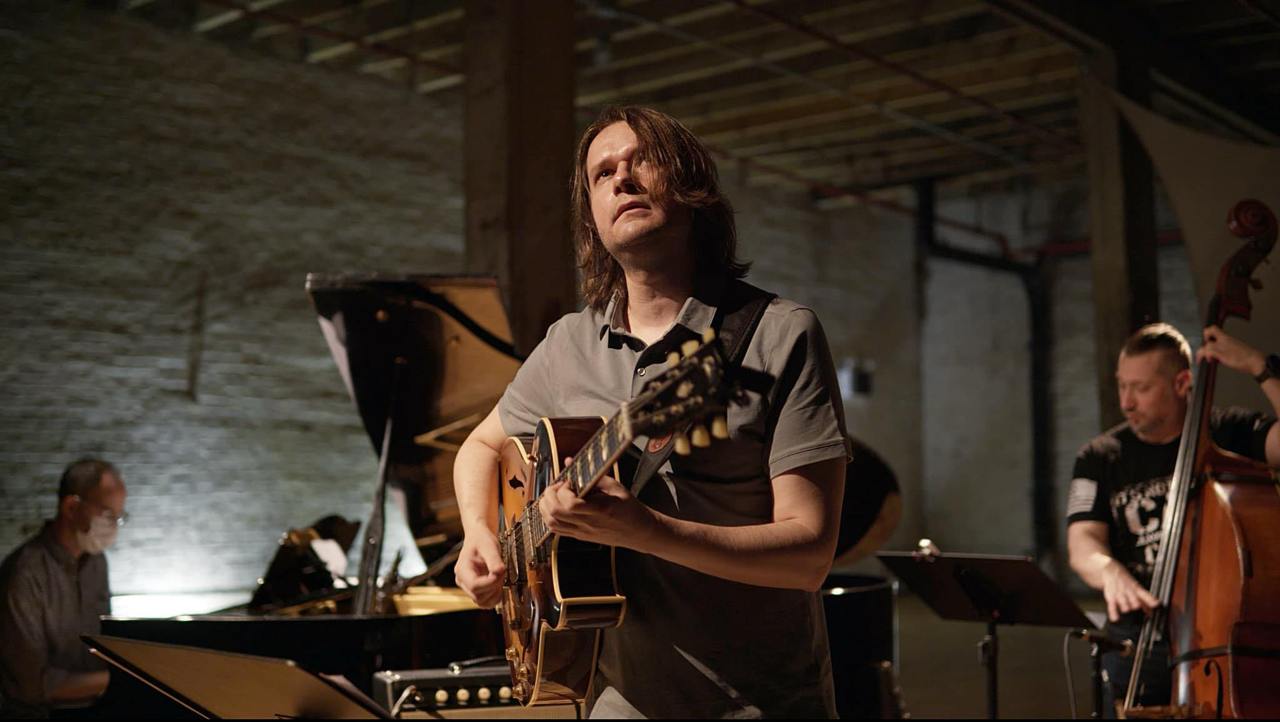
Not quite. Of course, the first guitar I ever picked was a classical six-string – I tried
playing Metallica’s Nothing Else Matters on it, using tablature my classmate had worked
out for me. I wasn’t very successful, I must admit, but back then I thought it wasn’t my
fault – it was because the guitar wasn’t electric. I realized I was wrong when my
neighbor tuned that six-string for me. It started sounding clearer and more harmonious,
and I discovered that with a properly tuned guitar, I could actually play pretty well. I’d
practice that riff for hours on end! I could skip eating or going outside – all I wanted was
to play the guitar. But I wasn’t drawn to the aesthetic of classical guitarists: all those
neat boys in white shirts playing Baroque études. Back then, I was into rock and
metal—I had no interest in anything “proper” or classical. My classmate who helped me
learn the intro to Nothing Else Matters convinced me and another guy to enroll in a
music school—and we did. It was the only school in Kharkiv for adults and kids with a
pop music department where you could choose the electric guitar. That’s where I
studied, and later I even worked there as a guitar teacher. So, to answer your question
about the classical guitar: I really started learning on the electric guitar. At my first
lesson, my teacher asked why I’d enrolled in music school, and I said, “I want to be a
lead guitarist in a rock band.” But later, I got genuinely interested in classical music and
wanted to study it. Since there aren’t classical pieces written for electric guitar, I made
my own arrangements of Bach, Handel, and Vivaldi, which I played at school exams
and concerts, among other things.
And what do you mean under “among other things”?
I was a die-hard metalhead! My teacher at the music school, Mikhail Ageev, understood
my taste and let me play what my heart was drawn to. Even better, he allowed me to
bring my bassist friend to lessons. We’d show up together and play Metallica or
Children of Bodom songs. Later, a drummer started joining us, and we’d rehearse like a
full-fledged rock band. That was a unique approach from our teacher. I’ll never forget
the power of that individual attention. Fun fact: when I applied to music college after
music school, they not only accepted me but also offered my teacher Mikhail Ageev a
job because they liked my technique, and there happened to be an open position for an
electric guitar instructor.
Would you say your education was still classical?
I’d say I gained academic knowledge and a deep understanding of classical music, but
I’m not a classical musician. The electric guitar isn’t considered a classical instrument.
In Ukraine and other post-Soviet countries, it’s classified as a pop instrument, while in
Europe and the U.S., it’s seen as a jazz one. Naturally, the repertoire I perform in life
and on stage isn’t classical either. But Ukraine’s music education system is deeply
academic and has its own canons, so I had to play Bach and Vivaldi on the electric
guitar too. On one hand, it’s a bit absurd, but on the other, it lets you see the instrument
from an unexpected angle and discover new possibilities. The classical guitar and the
electric guitar are two completely different instruments with entirely different aesthetics,
approaches, and repertoires. To get into college and pursue music professionally, I had
to learn music theory, music history, and brush up on solfege. In college, we didn’t play
rock or metal anymore – we played classical music and jazz, which is why I enrolled
there in the first place.
Can we say that you are a representative of the “Kharkiv jazz school”?
I enrolled in college because I wanted to immerse myself in the jazz scene and be
around jazz musicians. I was eager to understand jazz, to dive into it. But with all due
respect to my teachers, college wasn’t quite what I’d imagined. So, I did a lot of self-
education. I realized I needed something different – something more structured and
specific. Unfortunately, at that time in Ukraine, there wasn’t an established method for
teaching jazz guitar like there is in the U.S., for example. So, I found an online jazz
improvisation course for guitar by Jimmy Bruno and started studying it on my own.
That’s when I think I made a big leap in my professional growth – everything I’d already
learned finally fell into place. College had a lot of classical subjects, all valuable and
necessary, but I wanted to explore the world of jazz more deeply. Pretty soon, I started
playing with the leading musicians in Kharkiv, and later recorded my first album, A
Perfect Dream, with them.
Does your knowledge of classical music help you in your jazz career?
Absolutely! I love the aesthetic of classical music – it teaches you to pay attention to
details, especially sound, which I think some jazz guitarists lack. It’s hard to get a soft,
enveloping sound on an electric guitar that captivates the listener. In my work, I strive
for exactly that kind of sound, and judging by the feedback from listeners, I succeed. I’m
grateful to my teachers in Kharkiv for teaching me how to touch the guitar in a special
way and draw out a beautiful, soft tone. There’s a strong classical music school there
–they taught us to delve into the essence of any piece and understand it deeply. To me,
that’s the difference between the European and American schools: in Europe, they bring
a classical understanding to jazz, while in America, they honor jazz as it is. I consider
myself incredibly lucky to have these different musical threads woven into my life – I’ve
had the chance to study and apply the European approach and now immerse myself in
the American one.
Tell me more about these “different musical threads.” Besides your native
Ukraine, you’ve worked in Poland, Germany, Norway, and now the U.S. – what has
each of these threads brought to you?
That’s a deep question that deserves a long answer. In Europe, jazz is generally more
innovative, more improvisational, more avant-garde. They value free jazz, which might
sound like pure cacophony to an untrained ear. In the U.S., as the birthplace of jazz,
they hold traditions in higher regard and handle jazz standards with virtuosity. I lean
more toward the European approach: my music is based on complex harmonies, non-
standard forms, sometimes tricky time signatures, but paired with simple, lyrical
melodies. I love leaving space and freedom for other musicians to interpret my
compositions. I don’t impose my opinion on how a piece should sound. But having a
background in both European and American jazz, as well as free music, I can quickly
grasp the essence of other musicians’ compositions and easily fit into their style. In
terms of communication, though, the U.S. is much simpler. In Berlin, for example, to get
together with musicians you literally have to book a jam session three weeks in advance
and get on their “super busy and tight schedule”, so everything is much slower more
snobby and less enthusiastic. In New York, it’s easier and more relaxed. You can meet
someone on the subway in the morning, and by evening, they’re dragging their drums
and a Grammy-winning friend to your place. I love that my experience is woven from
such different approaches, styles, and relationships.
Is your experience always about concerts or studio recordings?
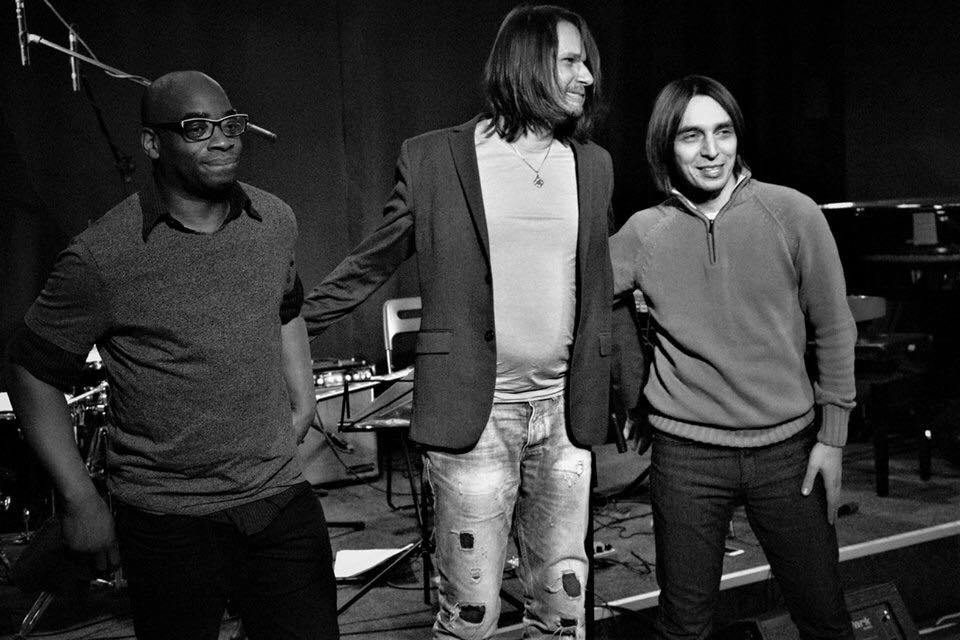
Oh, no! I’ve played in restaurants, done gigs at events, and I’ve been teaching for a long
time – almost 19 years now, starting back in college. I also have albums with my original
compositions.
I know it’s tough, but can you describe the music you create? What’s it like?
It’s hard indeed… I’d say this: even though I’m a jazz musician with a huge passion for
experimentation, I prefer to make my music melodic. In other words, I create beautiful
music. It’s always jazz – it might even be very intricately composed jazz – but it’s the
kind of jazz that won’t leave listeners confused or feeling disharmony.
How many original albums do you have?
Two released, and one currently in the works.
Ievgen, if you see yourself as a musician shaped more by the European
approach, why did you cross the ocean to New York instead of staying in Europe?
New York has a special energy, or I’d better say synergy. There’s an incredible power of
co-creation here. Both up-and-coming musicians and Grammy-winning legends are
quick to join jam sessions with young experimenters – everyone’s ready to create
something new. And when I say the U.S. honors jazz traditions, I don’t mean it’s
stagnant or rigid. Quite the opposite! There’s a unique blend of deep jazz understanding
and its roots with huge support for new visions and ideas. America has its own sense of
rhythm and swing. The rhythm here is something special, natural for musicians, it’s in
their blood. Local drummers are head and shoulder above European ones, and the
drummer is the heart of the band; they set the feel of the music. At my first jam in New
York, I realized, “This is it! Real swing!” I’m also amazed by how much respect and
support there is in the U.S. for composers and creators in general. New York is home to
the legends I’ve looked up to my whole life. And, as I’ve said, these legends aren’t aloof
snobs – they’re musicians who are easy to connect with, which is both surprising and
inspiring. When I came here six years ago, I knew the competition would be fierce.
People even tried to talk me out of moving to New York, saying I’d get lost or fade away.
But no. Here, I’m in a constant creative flow, inspired by freedom, and collaborations
happen that wouldn’t be possible anywhere else. Grammy winners have sat on my
living room couch jamming with unknown musicians. Though in jazz, everyone laughs at
titles and status – your true level is clear from the first notes. Mastery and depth define
a musician, not the number of Grammys or Instagram followers.
Yes. We’d get together to jam, and at some point, we started recording it on a phone. I
think it was 2019 when we began meeting on my couch. Then the pandemic hit, and
musicians suddenly lost gigs and opportunities to play with others. Our informal home
sessions became an outlet and a way to share experiences and ideas. A friend
suggested uploading them to YouTube, so we started doing live streams and added a
PayPal link in case anyone wanted to donate. As you can guess, no one was rushing to
throw money at us – we’d make about $10 per stream. But I got so excited about the
idea that I didn’t care about the numbers. I learned filming and editing, bought good
equipment. I’m a passionate person – if I latch onto an idea, I’ll work on it day and night
to figure it out. I wanted to show my original compositions to different musicians and
capture their raw reactions, ideas, and improvisations on camera. I aimed to invite
different musicians each time – ones who didn’t know each other – to make it more
interesting to watch their live creativity unfold. Imagine: someone shows up to jam but
doesn’t know who else will be there or what music we’ll play – nothing! That’s how they
did it in the old days. Vintage jazz recordings are often just the first or second take, with
all those charming imperfections and real-life moments.
But at some point, you moved from your living room to a studio, right?
Yes, when my daughter was born in the beginning of 2024 and it got tough to host at
home. But people had grown attached to our meetups and didn’t want them to stop. I’d
grown attached to the project too. So, I decided to rent a small studio and record the
sessions there. With a black velvet backdrop, it looks even nicer on camera.
Which well-known jazz musicians have joined you for a jam?
Lonnie Plaxico, Peter Slavov, Dave Smith, Paul Francis, Chris Bakas, Steve Carrington,
Sébastien Ammann, Gene Segal, and others. From the musicians who’ve come to my
jams – first at home, then in the studio – three bands have formed that are now actively
performing.
Ievgen, I must ask about your work with autistic people. You teach them guitar?
Yes, guitar. My wife teaches them painting, piano, sculpting, and knitting, so our whole
family is involved.
Do you work with kids or adults?
I work with people of all ages and with different forms of autism.
How did you get into this?
My friend Sergey Avanesov had been teaching piano to people with autism spectrum
disorders for a while and suggested I teach guitar, and my wife Nina teach painting. My
wife is also a musician and composer like me, but she’s gotten so good at painting and
teaching it that people now seek her out for art lessons almost more than for music.
Nina and I got interested, tried it out, and over time got deeply involved and started
working with autistic people regularly.
But that must be challenging…
I won’t sugarcoat it: yes, it’s tough. Many people try it, but almost no one sticks with it
because of the unique challenges. Every person with autism is different. Of course,
every person is unique, but with autistic individuals, that uniqueness is unpredictable
and can even be dangerous. There’ve been times when students attacked us – one
lunged at me with fists, another bit my wife during a lesson. You show up to a new
student and always think, “Man, what’s going to happen now?” Often, autism comes
with other disorders. For example, I had a student who washed their hands every five
minutes. Another had a full-on panic attack if I was even a couple of minutes late. Each
one needs a completely tailored approach based on how they perceive the world. And
you must remember that working with autistic people is never about results – it’s about
the process for the sake of the process.
Why?
To memorize music, you need serious focus, good memory, and the ability to plan
outcomes over time. Not everyone can do that. For most, it’s hard to concentrate for
even half an hour, let alone physically press down strings with their fingers, memorize
combinations, and repeat it all a week later. Painting, which my wife teaches, comes
easier to them, like therapy, relaxation, even meditation, a way to express what they
want to say. Music is harder as it requires absorbing material someone else created and
memorizing a lot. Some kids pick it up brilliantly, though! But others struggle even with
simple tasks.
How do families with autistic members find you?
In this community, it’s all about reputation. Nina and I started our own school – Eugene
and Nina Creative Lab – and families recommend it to each other. These families often
have agents who help organize activities for people with special needs, and those
agents know us and reach out. I’d also like to mention Sergey Avanesov’s school,
where we also teach – it’s called The Ninth Cloud.
What personal qualities help you not be afraid to work with autistic people?
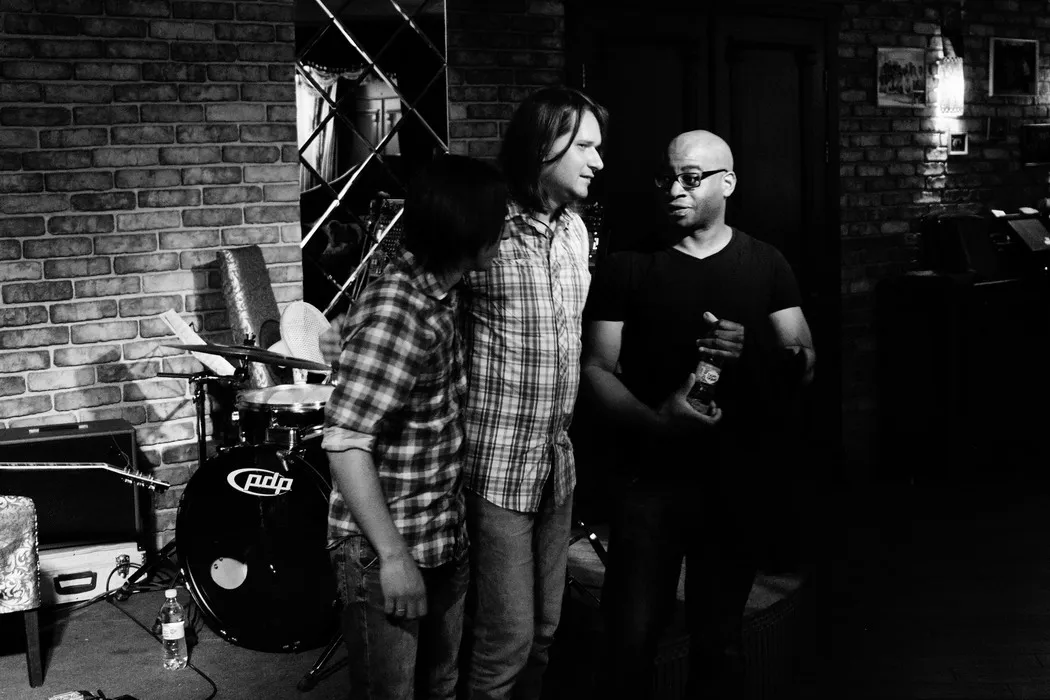
I don’t know. Maybe a high level of empathy. Nina and I really feel these people. And we
know we can genuinely help them. It’s our way to make a difference.
Beautiful…
It’s challenging, interesting, and there’s a sense that we’re helping these people and
their families. Yes, I suppose it’s beautiful.
Irina KIRYIEVICH for EventCartel